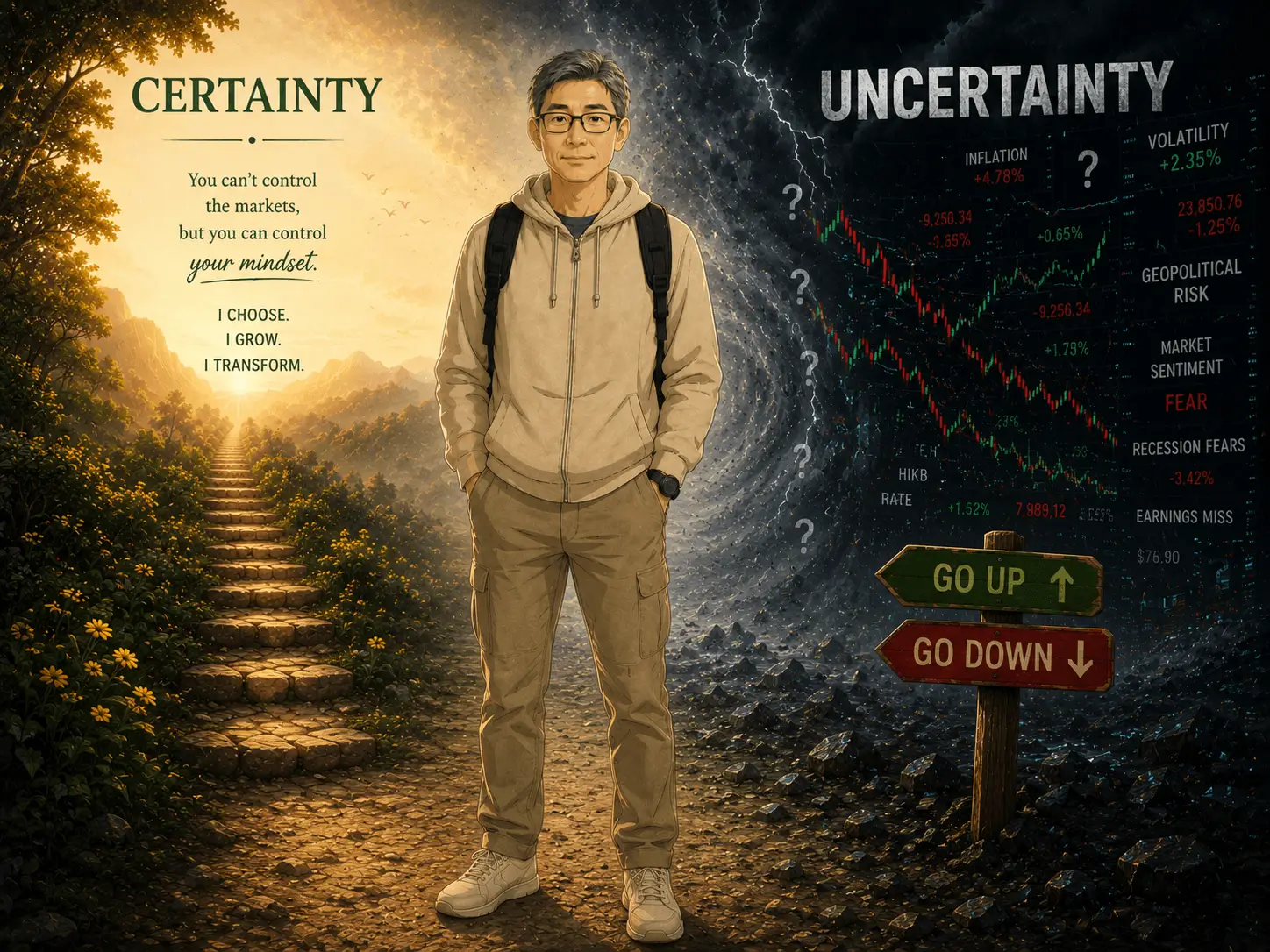

One of the biggest lessons I’ve learned in trading came from Kathlyn Toh, co-founder and chief trainer of Beyond Insights. She often reminds us that the market is dynamic. It is constantly evolving, impossible to predict with complete certainty, and will always contain an element of uncertainty.
That lesson seems simple, yet it fundamentally changed how I approach trading.
Every time I enter a position whether long or short, I never know with absolute certainty that the market will continue moving in the direction I expect. The best I can do is identify a high-probability setup based on my analysis and trading plan.
After all, markets can change in an instant.
A geopolitical conflict could suddenly erupt. An unexpected economic announcement could shake investor confidence. Even a single post from President Trump on Truth Social has been enough to trigger significant market volatility. These are events no trader can predict or control.
Ironically, uncertainty itself wasn’t what hurt my trading performance.
It was how I reacted to uncertainty.
There were several occasions when I hesitated because I wanted more confirmation or greater confidence before entering a trade. Instead of following my trading system, I allowed doubt and overthinking to take over and I missed excellent opportunities.
A perfect example was during the tariff-related market correction earlier this year.
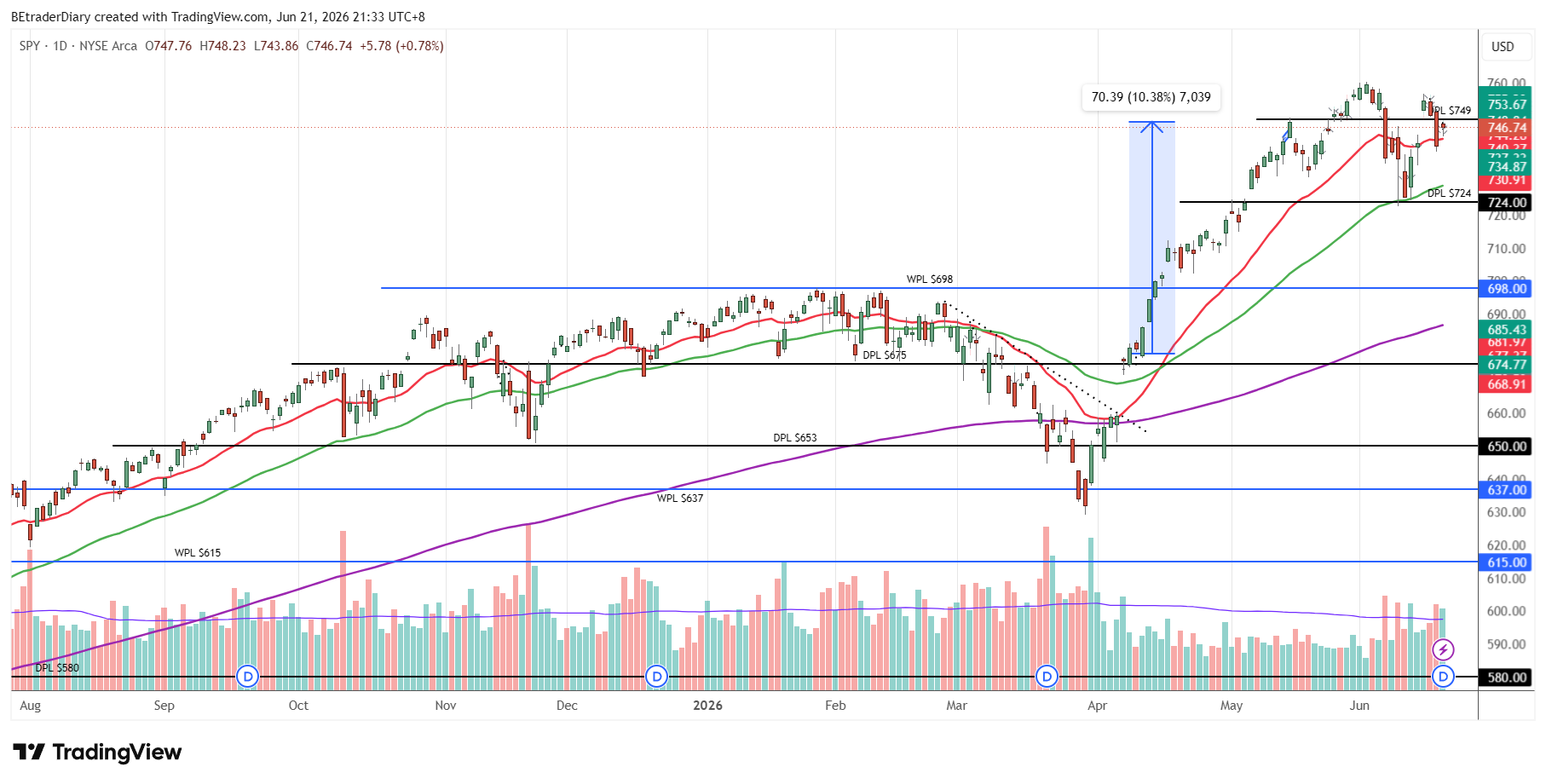
On 8 April 2026, the market broke above its downtrend line. Then, on 16 April 2026, the 20-day moving average crossed above the 50-day moving average, providing another strong technical confirmation that the trend had likely changed.
According to my trading system, those were valid buy signals.
Yet I hesitated.
Looking back today, the market has already rallied by approximately 10%.
That experience forced me to ask myself an important question:
What stopped me from taking the trade when my system was clearly giving me the signal?
The answer wasn’t the market.
It was my own uncertainty.
I realised I was overthinking the situation and, more importantly, allowing the fear of taking a loss to influence my decisions. This became much clearer to me during the Master Trader Bootcamp, where I began to understand how much psychology influences trading performance.
Kathlyn often says that successful traders learn to find certainty within uncertainty.
That idea resonates deeply with me.
We cannot control the uncertainty of the market. We cannot predict every headline, every geopolitical event, or every unexpected market reaction.
What we can control is everything on our side of the equation—our preparation, our discipline, our execution, and our commitment to following a proven process.
That is where real certainty comes from.
For me, that certainty is the STPM Framework taught by Beyond Insights.
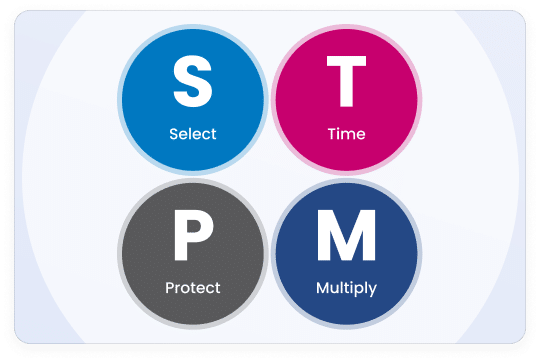
The framework provides a structured, repeatable process for every trade:
- Select – Identify high-quality stocks that meet predefined criteria.
- Time – Determine the optimal entry and exit points.
- Protect – Apply strict risk management to preserve trading capital.
- Multiply – Use appropriate instruments, such as CFDs or Options, to enhance returns when suitable.
Beyond the STPM Framework, I also rely heavily on the detailed process maps for Swing Trading, Trend Trading, and Intraday Trading. These step-by-step workflows help remove emotion from the decision-making process and ensure that every trade is executed systematically rather than impulsively.
Another source of confidence comes from understanding long-term megatrends.
While nobody can consistently predict short-term market movements, we can study where the world is heading. By identifying industries experiencing long-term structural growth and the companies best positioned to benefit from those trends, we can significantly improve the odds of making better investment and trading decisions.
This is one of the main reasons I attend the annual Beyond Insights Symposium.
This year marked the third symposium organised by Beyond Insights, and I’m grateful to have attended both last year’s and this year’s events. Each symposium has broadened my perspective, strengthened my conviction, and helped me better understand the long-term forces shaping the global economy.
If there’s one lesson that has stayed with me throughout my trading journey, it’s this:
Trading isn’t about eliminating uncertainty.
That’s impossible.
It’s about building enough knowledge, developing the right skills, and cultivating the discipline to execute your trading plan with confidence and even when uncertainty is present.
The most successful traders aren’t those who predict every market move correctly.
They are the ones who consistently follow a proven process, manage risk effectively, accept that losses are simply part of the business, and remain disciplined regardless of what the market does next.
The market will always be uncertain.
I’ve stopped looking for certainty in the market itself.
Instead, my goal is to become certain in my process.
If you’re beginning your own trading journey, remember this: uncertainty will always be part of the game. The goal isn’t to remove it, but to develop a process so robust that you can continue making disciplined, well-informed decisions despite it.
When you trust your process more than your emotions, uncertainty becomes something you manage not something that controls you.
Remember that it’s not about eliminating all uncertainties, but rather learning how to navigate them with confidence. Read How I started my trading journey if you are curious.


